
How to Choose Quality Hay for Horses: Appearance, Smell, Testing and Storage
Good hay is more than green colour and a pleasant smell. Learn how to check for dust and mould, when laboratory analysis helps, and how to protect your supply in storage.
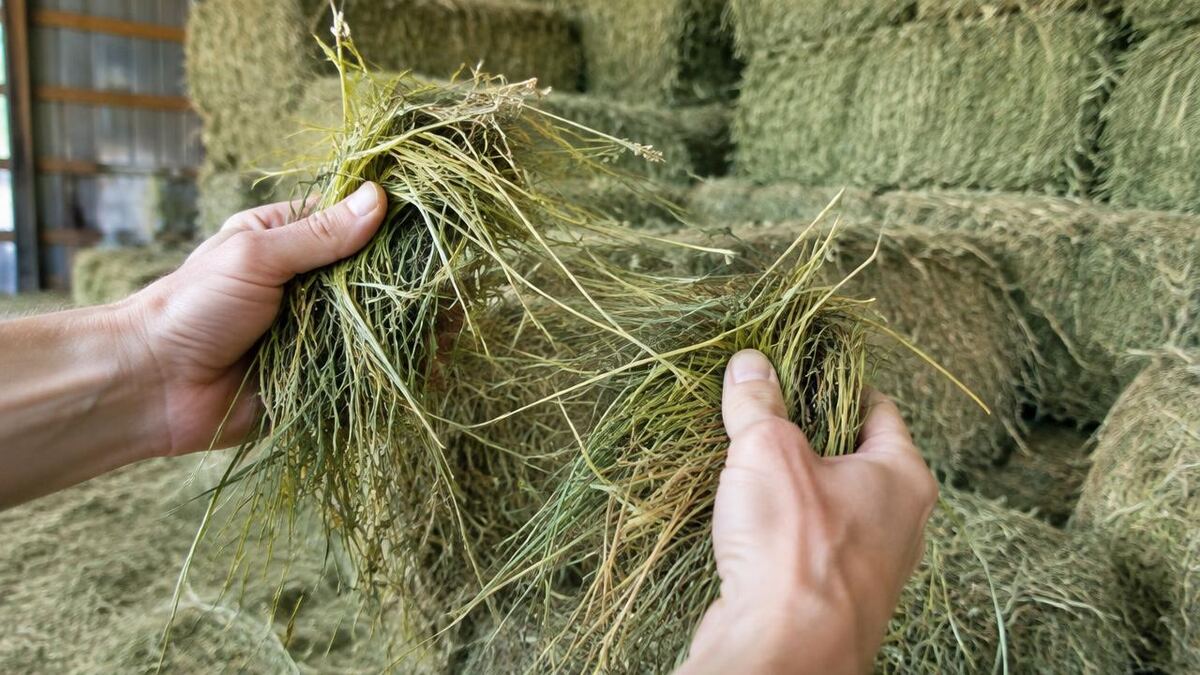
Hay is an important part of many horses’ diets. Its quality affects feed intake, digestion and respiratory health, so buying it deserves more attention than a quick look at a photograph. You need to understand the batch, the needs of the horse eating it and the conditions in which it will be stored.
The best choice is not necessarily the softest or greenest hay. A horse in demanding work may need a different nutritional profile from an easy-keeping pony. Good hygienic quality, however, is essential for both.
1. Start with the source and appearance
Ask the supplier where the hay came from, how mature the crop was when cut, how it was dried and how it has been stored. Establish whether the offered supply comes from one harvest and field or contains several different batches. This matters when comparing quality and arranging laboratory sampling.
Whenever possible, inspect several opened bales from different parts of the supply. Look inside each bale rather than judging only the outside. An exposed outer layer may be faded while the interior remains suitable, but an attractive exterior can also conceal a damp or mouldy centre.
Check for:
- The balance of leaves and stems, coarseness and overall consistency.
- Unidentified plants, suspicious weeds or poisonous species.
- Soil, stones, string, plastic and other foreign material.
- Matted patches, unusual stains and differences within the bale.
A greener colour may indicate better retention of plant pigments, but it does not prove nutritional value or hygienic safety. Yellowish hay is not automatically unsuitable. Pronounced browning together with an unusual smell can suggest unwanted heating.
Later-cut hay is often coarser, but appearance cannot reliably tell you its sugar or energy content. If you cannot identify a suspicious plant, seek knowledgeable help before feeding the batch. Drying does not make every poisonous plant harmless.
Also consider how easy the hay is for your particular horse to chew. Texture matters, but it should be assessed alongside dental health rather than treated as a substitute for a dental examination.
2. Use smell and dust checks to spot warning signs
Suitable hay should smell clean and naturally grassy. Musty, mouldy, sour or unusually scorched odours deserve investigation. Do not press a suspicious bale against your face or deliberately inhale dust to assess it.
Gently separate a small portion in a well-ventilated area and watch for a noticeable cloud of fine particles. Dust can contain soil, broken plant material and microorganisms. You generally cannot determine its composition just by looking at it.
Warning signs include:
- White, grey or dark growths and suspicious clumps.
- A musty smell that appears only after opening the centre.
- Damp, stuck-together or unusually warm sections.
- Substantial dust released during normal handling.
Do not feed mouldy hay. Removing the visibly affected portion does not establish that the remainder of the bale is safe. Equally, the absence of visible mould does not guarantee good hygienic quality.
Soaking or steaming is not a way to rescue spoiled forage. Appropriate treatment can reduce airborne particles in otherwise suitable hay, but it requires hygienic handling and prompt feeding. Treatment choices should suit the horse and the equipment available.
If your horse coughs while eating, develops nasal discharge or shows increased breathing effort, consult a veterinarian. Changing suppliers alone is not an adequate response to a possible respiratory condition.
Tip: Before ordering a large supply, agree on access to several opened bales and a clear process for reporting unsuitable hay. One attractive sample may not represent the delivery.
3. Test what your senses cannot measure
Visual and smell checks are useful for finding obvious defects, but they cannot replace nutrient analysis. Testing is particularly valuable when balancing a diet, investigating changes in body condition or managing a horse that needs careful control of energy and sugar intake.
Discuss the purpose of testing with the laboratory before collecting anything. A nutritional analysis and a hygienic investigation answer different questions. Suspected mould or other contamination may require different tests and a separate sample.
Depending on your needs, a forage analysis may include:
- Dry matter and moisture.
- Crude protein and fibre measurements.
- Sugars and, where relevant, starch.
- Selected minerals and an estimate of energy value.
Results are useful only if the sample represents the batch. Follow the laboratory’s sampling instructions. A representative sample commonly requires material from several bales, ideally collected with a suitable hay probe. A handful pulled from the surface of one bale can give a misleading picture.
Keep distinctly different batches or harvests separate for testing. Label samples clearly so that each report can be matched to the hay actually being fed. Check the units and whether values are reported on an as-fed or dry-matter basis before comparing reports.
A qualified equine nutrition professional can help interpret the results and balance the whole ration. Where a medical condition is involved, include your veterinarian in the decision. A general feed report should not be interpreted as proof that every possible contaminant is absent.
4. Match the hay to the horse
Fine, nutrient-rich hay is not automatically the best option for every horse. It may provide more energy than an easy keeper needs while being useful for another animal. Consider workload, body condition, health, chewing ability and the rest of the diet together.
For horses with insulin dysregulation or a history of laminitis, colour and descriptions such as “late-cut” are not reliable guides to suitability. Use appropriate analysis and a feeding plan agreed with your veterinarian. Where laminitis is involved, also work with a qualified farrier or hoof-care professional; dietary changes do not replace hoof care.
An older horse that drops partly chewed hay or produces wads of chewed forage needs a dental assessment. Buying softer hay may not solve the underlying problem. A veterinarian can advise on further investigation and, if necessary, more suitable forms of forage.
Introduce a new batch gradually when the previous hay remains safe to feed. Monitor appetite, droppings, water intake and body condition. If a horse refuses the new hay, investigate its quality first rather than leaving the horse without suitable forage for an extended period.
Do not assume that soaking will consistently make an unsuitable nutrient profile appropriate. Its effects vary, and wet forage needs careful handling. For a horse with a health-related dietary restriction, discuss the practical plan with your veterinarian or nutrition adviser.
5. Protect quality through safe storage
Good hay can deteriorate in a damp building. Choose a dry, well-ventilated storage area protected from leaks and wind-driven rain. Keep bales away from direct contact with a damp floor by using a suitable raised base, and allow room for air movement.
Coverings should not trap condensation against the hay. Protect the load during transport and unloading as well as in its final storage location. Do not bury wet or suspicious bales deep in a stack without assessment.
Build a simple storage routine:
- Identify each batch and retain its laboratory reports.
- Check the roof, walls, floor and smell of the storage area regularly.
- Keep the area tidy, manage pests and remove loose baling strings.
- Use older sound stock before newer stock.
- Inspect the interior every time you open a bale.
Hay baled with excessive moisture can heat dangerously and create a fire risk. If you notice pronounced heat, smoke or signs of a possible fire, do not dismantle the stack yourself. Leave the danger area and contact the fire service. Preventive moisture and temperature monitoring should use appropriate equipment and safe procedures.
Choosing hay is a combination of checking its origin, examining the material, using relevant tests and storing it properly. Looking for nutrition advice, veterinary care, a farrier or suitable boarding? Explore the services listed in the koneastaje.cz directory to find support for your horse.