
Winter Horse Nutrition: What to Change in Your Feeding Plan
A practical winter feeding plan starts with suitable hay, reliable drinking water and regular body-condition checks. Learn how to review minerals, assess energy needs and introduce fresh barley forage safely.
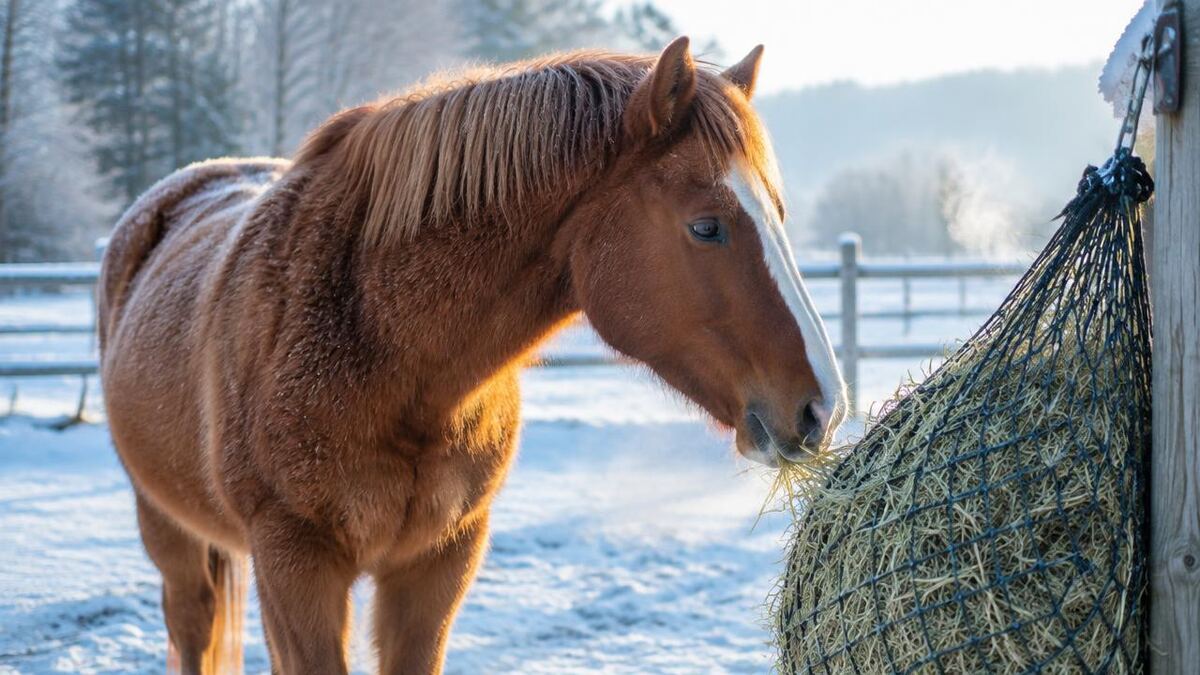
Winter feeding does not mean automatically adding grain to every horse’s bucket. Energy needs depend on weather, shelter, exercise, health and the horse’s ability to maintain condition. An older horse with dental problems needs a different approach from a working horse or an easy-keeping pony.
Start by checking the basics: how much hay the horse actually eats, whether it drinks enough, and whether the complete ration supplies essential nutrients without unnecessary calories. Make changes gradually and judge their success by the horse’s condition and health, not by how quickly the feed bucket is emptied.
1. Make hay the foundation
Suitable forage is the foundation of winter feeding. It provides fibre for normal digestive function, encourages chewing and produces heat through fermentation in the hindgut. When temperatures fall, the first step is often to review forage intake and availability rather than immediately increase concentrates.
The appropriate amount depends on body weight, condition, workload and any medical restrictions. Consider what the horse actually consumes, not just what is delivered. Hay trampled into mud or blown away does not contribute to the ration. In group housing, less assertive horses may also struggle to reach a feeder or remain there long enough.
Check the following each day:
- Hay smell, dust levels and any signs of mould.
- Wastage and the length of periods without forage.
- The number and safe positioning of feeding points.
- Whether each horse chews normally or drops partially chewed wads.
A hay analysis can help identify nutritional gaps and guide supplementation. It is particularly useful when one supply will form the basis of the ration throughout winter, or when feeding a horse with metabolic concerns. Soaking does not make mouldy hay safe. Discuss coughing or chewing difficulties with your veterinarian rather than simply changing the feeding container.
For overweight horses, avoid using long periods without food as a weight-loss strategy. Controlled quantities of suitable forage and safe ways to slow consumption are better discussed with a qualified professional.
2. Check water intake, not just the trough
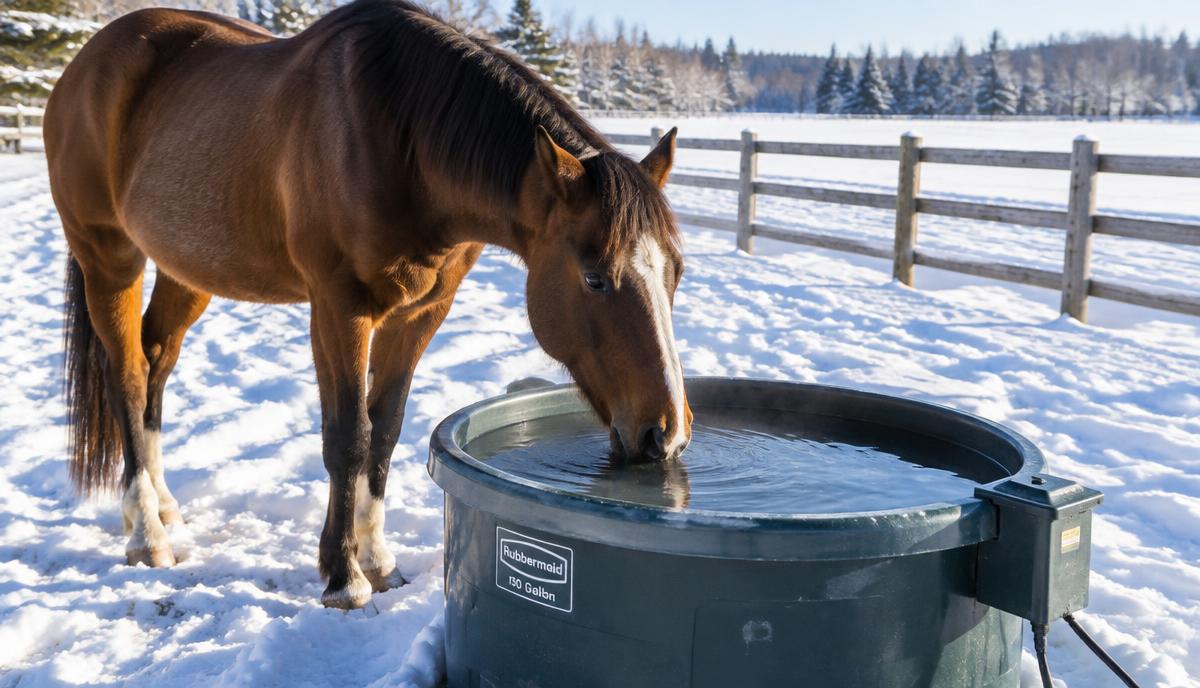
A horse moving from pasture to dry forage receives less water from its food. Some horses are also less willing to drink in cold weather. Inadequate water intake can increase the risk of digestive problems, making water checks an essential part of the winter routine.
Seeing water in a bowl is not enough. An automatic drinker may have poor flow or frozen pipework even when the bowl looks normal. Another horse may guard access, and icy ground can make the approach unsafe. Watch individual horses drinking whenever possible.
- Remove ice and clean containers regularly.
- Test automatic drinkers as often as conditions require.
- Offer lukewarm water if a horse is reluctant to drink cold water.
- Monitor usual consumption, droppings and changes in behaviour.
Snow is not a reliable replacement for drinking water. Appropriate soaked feeds can contribute moisture, but they do not replace continuous access to water. Prepare them hygienically according to the manufacturer’s instructions and serve promptly so they do not spoil or freeze.
Tip: During morning and evening checks, record hay intake, drinking, appetite and droppings. A brief written note can reveal a developing change more clearly than a quick glance at the horse.
Contact your veterinarian promptly if you notice signs of colic, a marked reduction in droppings, or refusal to drink accompanied by dullness. Do not wait for a routine feeding adjustment to solve an acute problem.
3. Review minerals and energy across the whole ration
Hay alone may not supply every required mineral and vitamin. Choose a suitable mineral or vitamin-and-mineral supplement according to the forage, the horse’s life stage and its workload. A plain salt lick is not a complete mineral supplement, and voluntary consumption varies between horses.
Before adding a new product, list everything the horse receives. A fortified compound feed may already contain the nutrients supplied by another supplement. Combining several products can create unnecessary overlap, and excessive amounts of certain nutrients, such as selenium, can be harmful.
The opposite problem also occurs: a fortified feed offered well below its recommended feeding rate may not provide its intended daily vitamin and mineral contribution. The whole ration matters more than the claims on any individual bag.
Ask these practical questions:
- How much of each product does the horse actually consume?
- Do any supplements duplicate one another?
- Does the ration match current work and health needs?
- Is salt provision appropriate, with unrestricted access to water?
Only increase energy when there is a reason. If a horse loses weight despite sufficient suitable forage, investigate teeth, health, competition for food and exposure to cold or wind. Additional energy may then be provided through suitable digestible-fibre feeds or carefully introduced fat sources.
Large, starchy meals are not a universal winter solution. Divide supplementary feed into smaller meals and consult a veterinarian or equine nutrition professional, especially for horses with metabolic disease.
4. Use fresh barley forage as an optional green component
Fresh barley forage, including young plants grown from sprouted barley, can add variety to a winter ration. However, it is optional rather than essential, and it is not automatically equivalent to grazing. It does not replace sufficient hay, drinking water or a balanced mineral supply.
Distinguish fresh weight from dry matter. Much of the weight of fresh forage is water, so a kilogram of green material does not provide the same nutritional contribution as a kilogram of hay. The composition of sprouted forage also varies with the seed, growth stage and growing conditions.
Do not assume that sprouting makes every batch low in sugar or starch. Where these nutrients need to be controlled, the actual product and the complete ration require assessment.
For safer introduction:
- Begin with a small amount and increase gradually.
- Use suitable untreated seed intended for this purpose.
- Keep water, trays and growing surfaces clean.
- Reject forage with mould, a musty smell or slimy areas.
- Monitor appetite, manure consistency and individual tolerance.
The warm, damp conditions used for sprouting can also support unwanted microorganisms. Discard a suspect batch; rinsing does not guarantee safety. Check the forage again before feeding, particularly after storage or transport.
For horses with insulin dysregulation, previous laminitis or sensitive digestion, discuss suitability with your veterinarian first. Green appearance is not evidence of dietary safety. An analysis of the actual forage can help when a more precise ration is needed, and its dry-matter contribution should be included in the overall feeding calculation.
5. Let body condition guide the next adjustment
A thick winter coat can hide both weight loss and weight gain. Do not assess condition by sight alone. Regularly feel the ribs, the area behind the shoulder, the back and the tailhead. Note changes in muscle as well as fat deposits, including those around the neck.
Repeated weight-tape measurements and photographs taken in a similar position can help identify a trend. A weight tape is not a substitute for accurate weighing, but consistent technique makes it more useful. Record changes in exercise, turnout and feeding alongside the measurements.
- A horse losing weight needs its intake and health checked.
- A horse gaining weight does not need extra calories simply because it is winter.
- An older horse may need a different forage form because of dental limitations.
- A horse doing less work needs its previous ration reassessed.
Shelter, dry resting areas and protection from wind belong in the same winter plan as feeding. When condition declines without an obvious explanation, do not rely only on a larger bucket feed. Your veterinarian can investigate dental disease, pain and other health concerns.
Discuss hoof soreness or changes in stance with your farrier as well, but contact the veterinarian first if laminitis is suspected. Feeding, hoof care and exercise decisions should support the same health plan rather than work against one another.
Need help with winter feeding, boarding or hoof care? Explore the koneastaje.cz directory to find equestrian services in your area and professionals suited to your horse’s needs.